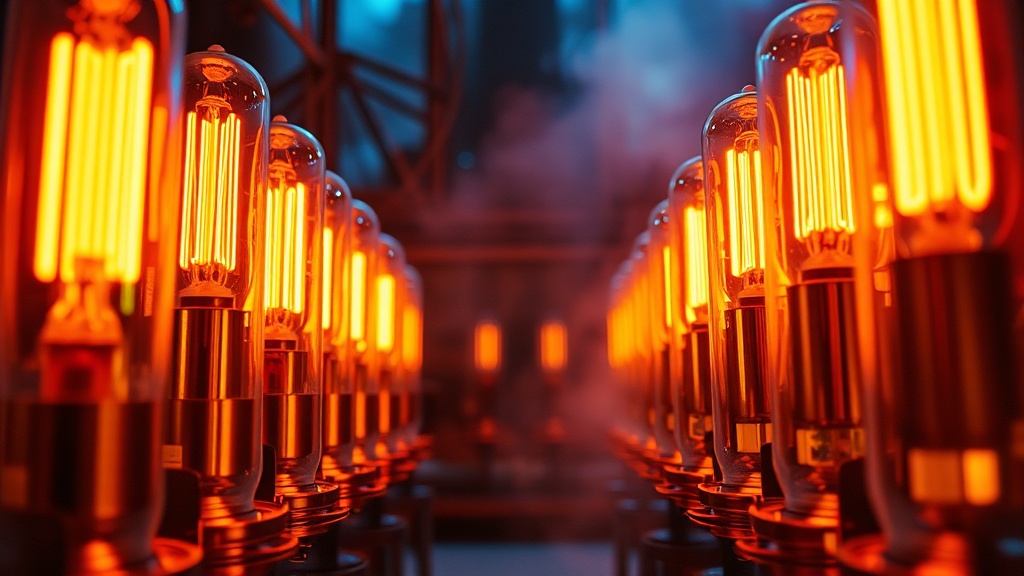
The Magic of Warm Glows and Vacuum Tubes

A single vacuum tube can reach temperatures exceeding 200 degrees Celsius while operating, a heat signature that defines the very soul of vintage electronics. This post explores the technical and sensory appeal of vacuum tube technology, specifically how it produces the "warm" sound collectors crave. We'll look at why certain brands became legendary, how to identify tube types, and why the physical glow of a working radio is a hallmark of high-quality vintage engineering.
What Makes Vacuum Tube Sound Different?
Vacuum tubes produce a distinctively warm sound because they naturally introduce subtle harmonic distortion when pushed. Unlike modern solid-state transistors that aim for clinical precision, tubes add even-order harmonics that the human ear perceives as "musical" or "smooth." This isn't a defect; it's a characteristic of the physics involved.
When an audio signal passes through a vacuum tube, the way the electrons interact with the control grid creates a soft saturation. This saturation rounds off the harsh peaks of a waveform. If you've ever listened to a modern digital file and felt it sounded "thin" or "brittle," you're likely missing that organic warmth. The physics of the vacuum tube allows for a non-linear response that feels much more natural to our brains.
The warmth isn't just psychological, either. It's a physical reality of how the components react to voltage. A radio using tubes like the RCA 6V6 or the classic 12AX7 will have a different texture than a modern radio using a microchip. It's the difference between a sharp photograph and a soft-focus painting.
It's also worth noting that this "warmth" is why many high-end recording studios still use vintage gear. Even in a digital age, the physical presence of a tube changes the way we hear music. It adds a sense of depth and space that feels three-dimensional.
Why Do Collectors Value the "Warm Glow"?
The visual glow of a heated filament provides a sense of life and mechanical presence that modern tech lacks. For many of us in the collecting community, a radio isn't just a tool for listening to the news; it's a living piece of history. When you flip that switch and see the orange filaments beginning to burn through the glass, you know the machine is "breathing."
That glow serves several purposes:
- Visual Confirmation: It tells you the power transformer is working and the heater circuit is intact.
- Atmosphere: It provides ambient lighting that complements the aesthetic of a mid-century living room.
- Connection: It creates a visceral link to the era of the "Golden Age" of radio.
I often find that new collectors get hooked not by the audio, but by the sight of that first flicker of light. It’s a ritual. You wait for the warm-up period—sometimes a full minute—before the sound even begins to emerge. That patience is part of the charm. If you're just starting out, you might want to check out the beginner's guide to collecting vintage tube radios to understand the basic components you'll be seeing under the hood.
The glow is a sign of energy being converted into sound. It's a physical manifestation of the invisible waves traveling through the air. It makes the technology feel less like a black box and more like a companion.
How Much Does a Vintage Tube Radio Cost?
The price of a vintage tube radio typically ranges from $50 for a basic tabletop model to over $1,000 for high-end or rare collector pieces. Price is driven by three main factors: the brand, the aesthetic condition, and the internal functionality. A standard Zenith or RCA model from the 1940s is often affordable, but a rare high-fidelity console will command a premium.
| Radio Category | Typical Price Range | Key Value Drivers |
|---|---|---|
| Budget Tabletop | $40 – $120 | Basic functionality, common brands (Zenith, Philco). |
| Mid-Range Console | $150 – $450 | Wood cabinet condition, aesthetic appeal. |
| Premium/Rare Finds | $500 – $1,500+ | Specific brand history, mint condition, rare tubes. |
| High-End Hi-Fi | $2,000+ | Audiophile grade, rare vacuum tube configurations. |
Don't assume a low price means a good deal. Often, a "cheap" radio is just one with a blown transformer or a dead tube. Replacing a transformer is much harder (and more expensive) than replacing a simple tube. Always ask the seller if the unit has been tested recently. A "decorative" radio that doesn't work is a much different beast than a functional piece of history.
If you find a beautiful piece but the wood is looking a bit dull, don't panic. Proper care can bring it back. I've written about thoughtful care for your vintage radio collection to help you keep those finishes looking sharp. The goal is to preserve the history, not just own a dusty box.
Common Tube Types and Their Uses
Understanding the specific tubes inside your radio helps you troubleshoot and appreciate the engineering. Most vintage radios use a combination of rectifier, driver, and audio output tubes. Each has a specific job to do in the circuit.
- Rectifier Tubes: These convert the AC voltage from the transformer into the DC voltage needed to power the rest of the radio. Without these, the radio is just a silent box.
- Pre-amplifier Tubes: These take the weak signal from the antenna and boost it. These are often the source of that "musical" distortion we discussed.
- Power Output Tubes: These are the heavy hitters. They drive the speaker and require significant power. If these fail, you lose your sound entirely.
When you're looking at a piece of equipment, the tube layout can tell you a lot about its intended use. A radio designed for high-fidelity listening will have a more complex arrangement than a simple AM-only model. It's a bit like looking at a car engine—the more parts there are, the more sophisticated the machine. (And yes, they can be quite temperamental if you don't treat them right.)
One thing to keep in mind: never replace a tube with a different type unless you are certain the socket and voltage are compatible. A mismatch can lead to a much larger problem than just a broken radio. It can actually damage the transformer. It's better to be safe than sorry.
The beauty of these components is that they are modular. You can actually "tune" a sound by swapping out certain tubes, provided you know what you're doing. It's a way to interact with the machine that modern technology has completely stripped away. We've traded that interaction for convenience, but I'd argue we lost something special in the process.
If you're interested in the more technical side of how these pieces fit into a larger historical context, you might enjoy reading about the Golden Age of Shortwave. It provides the perfect backdrop for understanding why these tubes were the backbone of global communication.
The more you learn about the components, the more the "magic" starts to make sense. It isn't just magic—it's beautiful, predictable, and slightly chaotic physics. That's what makes the hobby so addictive for me. You aren't just collecting objects; you're collecting the way they interact with the world around them.