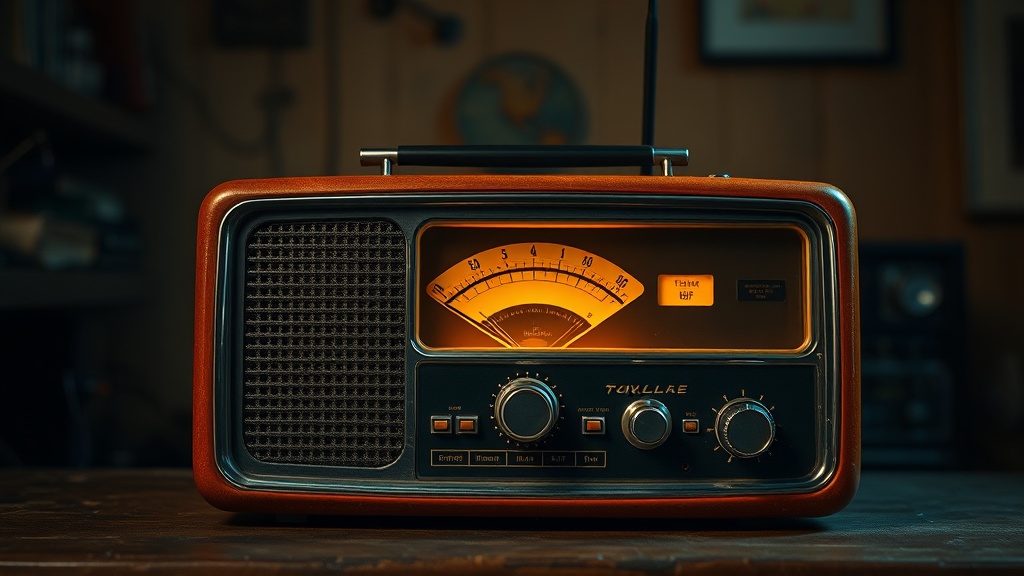
The Golden Age of Shortwave and the Rise of the Bakelite Era

The hum of a vacuum tube warming up is a specific, low-frequency vibration that settles in your chest before the music even begins. It’s a tactile sensation, paired with the amber glow of a dial scale that looks like a tiny, illuminated cityscape. This post explores the intersection of technical advancement and aesthetic revolution during the 1930s, specifically focusing on the transition from wooden cabinet radio sets to the sleek, sculptural forms of Bakelite. Understanding this era helps collectors identify why certain-looking pieces are actually high-value design icons rather than just old electronics.
For decades, the radio was a heavy, wooden piece of furniture. It sat in the center of the living room like a silent, stoic sentinel. But then, something changed. The material science of the early 20th century caught up with the ambitions of industrial designers, and the radio stopped being a piece of furniture and started becoming a piece of art.
What is Bakelite and Why Does It Matter to Collectors?
Bakelite is a thermosetting phenol formaldehyde resin that revolutionized the way consumer electronics were manufactured and styled. Unlike wood, which requires heavy machining and carries significant weight, Bakelite allowed manufacturers to inject liquid into molds to create complex, flowing shapes that were previously impossible. It's the reason we have those iconic, curvy "Art Deco" silhouettes that define the high-end collector market today.
When you hold a piece of genuine Bakelite, you'll notice a weight and a temperature that feels different from modern plastics. It's dense. It’s cool to the touch. It doesn't feel "cheap" or hollow. This material allowed brands like Zenith and Philco to move away from the bulky, rectangular boxes of the 1920s and into the streamlined, aerodynamic looks of the 1930s.
The rise of shortwave technology during this period also changed the way people interacted with the world. Suddenly, a listener in a small town in Tennessee could hear a broadcast from London or even the Soviet Union. This sense of global connectivity was a massive psychological shift. The radio wasn't just a local news source anymore; it was a window into a much larger, more complex world. To see more about the chemical history of these materials, you can check the technical history of Bakelite on Wikipedia.
One thing to watch out for is "imitation" plastics. Many radios from the late 1940s use Catalin or other early plastics that look similar but lack the specific density and thermal properties of true Bakelite. Identifying the difference is a skill that separates the casual hobbyist from the serious collector.
How Did Shortwave Radio Change the Golden Age of Broadcasting?
Shortwave radio expanded the reach of global broadcasting by utilizing higher frequency electromagnetic waves that could bounce off the ionosphere to travel thousands of miles. This capability turned the radio from a domestic appliance into a geopolitical tool. During the 1930s and 40s, the ability to broadcast across oceans meant that news—and propaganda—could travel faster than any physical vessel.
The technical leap was immense. Shortwave receivers required more precision and better tuning capabilities than standard AM-only sets. This drove innovation in the internal components, leading to more sophisticated circuitry and more robust tuning dials. If you're looking to maintain these delicate internal systems, I highly recommend reading my guide on thoughtful care for your vintage radio collection.
The impact on design was also significant. Because shortwave radios were often more "advanced" technology, they were frequently marketed as premium products. This meant they received the best design treatment. You'd see more elaborate dial scales, more intricate lighting, and more sophisticated control layouts. The radio became a status symbol of the modern age.
Here is a breakdown of the primary materials used in radio housing during this transition:
| Material | Primary Era | Common Aesthetic | Collector Value Note |
|---|---|---|---|
| Hardwood (Walnut/Mahogany) | 1920s - Early 1930s | Rectangular, heavy, traditional | Highly valued for "furniture" style pieces. |
| Bakelite | 1930s - 1940s | Art Deco, curved, sculptural | The gold standard for mid-century collectors. |
| Catalin | Late 1930s - 1940s | Vibrant colors, translucent | Extremely high value if in good condition. |
| Early Plastics (Polystyrene) | Late 1940s - 1950s | Streamlined, lighter, mass-produced | More common; less "prestige" than Bakelite. |
What Makes an Art Deco Radio Highly Collectible?
A radio is considered highly collectible if it features a combination of rare material (like Catalin or high-grade Bakelite), a distinctive sculptural design, and a functional shortwave band. Collectors aren't just looking for a working machine; they are looking for a piece of industrial art that represents a specific moment in human history.
The most sought-after pieces often feature the "Streamline Moderne" aesthetic. This style emphasized long, horizontal lines and rounded corners—think of the look of a high-speed locomotive or a luxury ocean liner. If a radio has those sleek, aerodynamic curves, it's likely a high-value item.
There are three main factors that drive up the price of these vintage pieces:
- Material Rarity: A radio made of deep red or marbled Bakelite is much harder to find than a standard black model.
- Functional Complexity: A set that includes a working shortwave band (SW) is more desirable to the technical collector than a standard AM-only set.
- Condition of the Finish: Because these materials can be sensitive to UV light and temperature, a "mint" condition piece is a rarity.
The catch? Many collectors forget that the "look" of the radio is only half the battle. A beautiful Bakelite shell is useless if the internal vacuum tubes are cracked or if the wiring has become brittle and dangerous. Always check the internal state before committing to a heavy, expensive purchase.
The transition from the heavy, wooden radio to the sleek, Bakelite-encased shortwave receiver wasn't just a change in fashion. It was a reflection of a world that was getting smaller, faster, and more interconnected. We moved from the era of the hearth—where the radio was a part of the furniture—to the era of the cockpit, where the radio was a high-tech instrument of the modern age. For those of us who collect these pieces, we aren't just collecting old electronics. We're collecting the physical evidence of how the world changed its mind about what it could hear and what it could see.
If you're curious about the actual physics of how these signals travel, the National Institute of Standards and Technology (NIST) provides excellent documentation on the history of radio frequency standards and electromagnetic-wave-based communication.