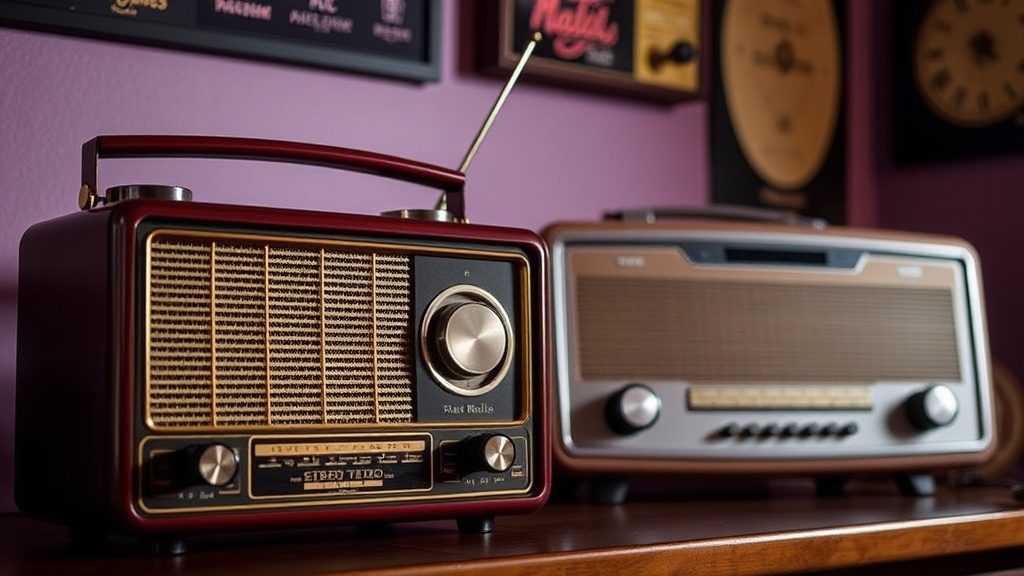
Rare Radio Models That Changed How the World Listened

The Marconi Era Pioneers
The Golden Age of Tabletop Radios
Mid-Century Modern Design Icons
Imagine a living room in 1935. The lights are low, and the only source of light is the amber glow of a vacuum tube warming up. Suddenly, a voice cuts through the static—not from a distant stage, but from a wooden box sitting right on the side table. That moment changed everything. It turned a private household into a participant in global history.
This list explores the specific radio models that shifted the way humanity consumed information and entertainment. We aren't just looking at pretty wooden boxes; we're looking at the machines that defined eras. From the birth of mass broadcasting to the era of portable transistor tech, these models represent the high-water marks of engineering and design.
What Made the RCA Victor Radios So Famous?
The RCA Victor models dominated the airwaves by combining high-fidelity sound with striking Art Deco aesthetics. RCA wasn't just selling a radio; they were selling a piece of furniture that happened to broadcast the news. During the 1930s, RCA's engineering pushed the boundaries of signal clarity, making the transition from "static-heavy" to "crystal clear" a reality for the average listener.
Collectors often look for RCA models because of their iconic silhouettes. If you've ever wondered about the internal mechanics of these heavy hitters, you might want to read about the magic of warm glows and vacuum tubes to understand why they sound so distinct. The warmth isn't just a feeling—it's a result of the specific voltage and tube types used in these high-end sets.
- The RCA Victor Model 80: A staple of the late 1930s, known for its deep bass and reliable reception.
- The RCA Victor "Cathedral" Style: These models featured the tall, arched design that became the visual shorthand for the "Golden Age of Radio."
- Technical Edge: RCA was a leader in patenting technologies that allowed for better tuning stability, a huge deal when you were trying to catch a specific broadcast.
Which Radio Models Revolutionized Portability?
The introduction of the transistor changed the world by moving the radio from the living room to the pocket. Before this, a radio was a stationary object—a heavy, cumbersome piece of furniture that required a wall outlet. The transition to transistor technology meant that music and news could travel with you to the beach, the park, or the stadium.
The most significant leap came with the Regency TR-1. Released in 1954, it was the first commercially successful transistor radio. It didn't just change how we listened; it changed how we lived. Suddenly, the "youth culture" had a soundtrack that wasn't tethered to their parents' living room. This was the beginning of the mobile-first world we live in today.
It's worth noting that while these smaller units were a marvel of engineering, they were much more delicate than their vacuum tube predecessors. If you find one of these in an antique shop, check the battery compartments carefully. Corrosion is the silent killer of vintage transistor sets.
The shift in technology can be seen in this comparison of the two major eras:
| Feature | Vacuum Tube Era (1920s-1940s) | Transistor Era (1950s-1960s) |
|---|---|---|
| Primary Power | AC Wall Outlet | Batteries/Portable Power |
| Sound Profile | Warm, rich, heavy bass | Crisp, mid-range focused |
| Typical Size | Large furniture piece | Handheld/Pocket-sized |
| Durability | Heavy, fragile tubes | Compact, sensitive circuits |
Why Do Collectors Value Zenith Stratosphere Radios?
The Zenith Stratosphere is considered the "Holy Grail" for many collectors because of its sheer scale and historical presence. It was a massive, high-fidelity machine designed to be the centerpiece of a home. It wasn't just a radio; it was a statement of wealth and technological prowess.
Collectors prize these because they represent the absolute peak of the "furniture radio" era. The craftsmanship involved in the wood cabinetry and the complex wiring inside is often breathtaking. However, owning one isn't without its headaches. These large units require significant space and, more importantly, a lot of care. If you're planning to display one, check out my tips on displaying and caring for your vintage radios to ensure you don't damage the wood or the internal components.
A few things to look for when hunting a Zenith:
- The Cabinet Condition: Is the veneer peeling? High-quality wood is hard to find in good shape.
- The Dial Glass: A cracked or missing dial-glass is a major red flag for value.
- The Originality of the Components: Has it been "repaired" with modern parts? This often lowers the collector value significantly.
The Zenith Stratosphere was part of a movement where radio sets became much more than just utility. They were status symbols. According to Zenith's own historical archives, the company was a pioneer in making high-fidelity sound accessible to the domestic market, long before the term "Hi-Fi" was a household phrase.
How Much Does a Rare Model Cost Today?
The price of a rare radio depends almost entirely on its condition, its provenance, and its "playability." A broken Zenith Stratosphere might be a fun project, but a fully functional, original-condition unit is a high-end investment piece. You aren't just buying a machine; you're buying a piece of history.
For a standard, mid-range 1940s tabletop radio, you might spend anywhere from $50 to $150. But if you find a highly sought-after model like an original Regency TR-1 or a pristine RCA Victor, the prices can skyrocket. Some collectors are willing to pay hundreds, even thousands, for models that have been professionally restored and are in "museum quality" condition.
Here's the thing: a "working" radio isn't always a "good" radio. A radio might play, but if the sound is thin or the static is overwhelming, it's not a great listening experience. I've written about why your 'working' vintage radio probably isn't actually in top shape, and it's a distinction that can save you a lot of money at auctions. A radio that "works" might have a dying capacitor that could eventually blow a transformer—and a transformer is a very expensive thing to replace.
When you're browsing auctions, don't just look at the photos. Look at the descriptions. If a seller says "tested and working," ask them what they mean. Did they test it for ten minutes, or did they listen to a full broadcast? The details matter.
If you're a new collector, start small. Don't go chasing a Zenith or a high-end RCA right away. Pick up a simple, sturdy model from the 1950s. Learn how the circuits work, learn how to clean the dial, and learn how to handle the materials. It's easy to get carried away by the aesthetics, but the real joy is in the mechanics and the history.