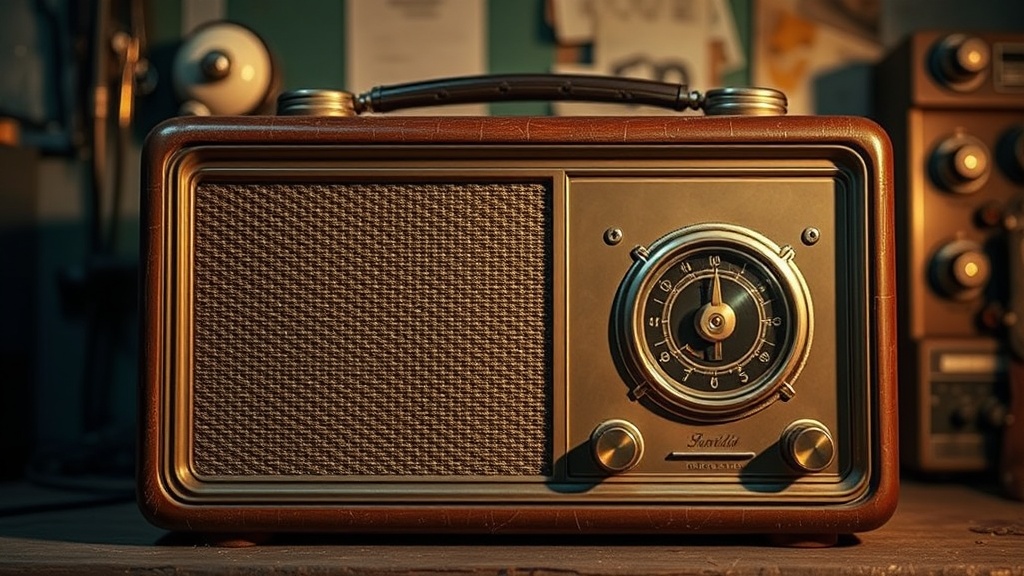
Why Your 'Working' Vintage Radio Probably Isn't — And What Repair Really Costs

What Makes a Vintage Radio 'Fully Functional' Anyway?
There's a persistent myth in the collecting world that a vintage radio either works or it doesn't—that flicking the switch and hearing static means you've got yourself a keeper. That's rarely true. A tube radio from 1947 might power on and pull in a station, but that doesn't mean it's operating anywhere near its original specifications. Capacitors degrade whether the radio sits in a closet or plays daily. Transformers develop internal shorts. Alignment drifts. What collectors often call "working" is really "barely functioning"—and running a vintage set in that condition can cause irreversible damage.
This guide cuts through the folklore surrounding vintage radio repair. We'll look at what actually needs attention in these machines, why DIY fixes often destroy value, and how to budget for professional restoration. Whether you're holding your first cathedral radio or considering a console that's been in your family for generations, understanding the real cost of maintenance will save you money—and maybe your radio.
Why Do Capacitors Matter More Than Tubes?
Walk into any estate sale and you'll hear the same phrase: "The tubes light up." Sellers treat this like proof of functionality. Here's what they don't understand—tubes are often the most durable components in a vintage radio. They were built to last decades, and many of them did. The real culprits behind poor performance (and potential fire hazards) are the paper and electrolytic capacitors that have been sitting silently degrading since the Eisenhower administration.
Paper capacitors—those little wax-dipped cylinders scattered across the chassis—absorb moisture over time. They leak DC voltage where they shouldn't, causing hum, distortion, and in worst cases, arcing that damages transformers. Electrolytic capacitors in the power supply dry out. When they fail, they can send lethal voltage to places it doesn't belong. A radio with original capacitors isn't "original" in any meaningful sense—it's a time bomb.
Recapping a vintage radio (replacing all capacitors) typically costs between $150 and $400 depending on the complexity. A simple five-tube AC/DC table radio might need a dozen capacitors. A twelve-tube console with separate bass and treble circuits could require three times that. This isn't optional maintenance—it's preservation. Running a radio with original capacitors is like driving a car with sixty-year-old brake lines. Technically possible. Practically foolish.
You'll find excellent technical background on capacitor replacement at the Antique Radio Forums, where restoration professionals document their work on sets spanning every era of radio manufacturing.
Can You Really Align a Radio Yourself?
Alignment—adjusting the tuned circuits to match the frequencies on the dial—is where enthusiastic amateurs often destroy valuable radios. It requires specific equipment: a signal generator, an alignment tool (non-metallic, to avoid detuning while you adjust), and most importantly, the service documentation showing exactly where the adjustment points are located.
Without the schematic, you're guessing. And these aren't intuitive adjustments. An IF transformer might have two adjustment screws—one for the primary, one for the secondary—and turning them randomly hoping for better reception usually makes things worse. Over-adjustment can break the internal connections. Once that's happened, you're hunting for replacement parts that haven't been manufactured since the Korean War.
Professional alignment runs $75 to $150 as a standalone service, though most restorers bundle it with recapping. The Radio Museum maintains an extensive database of service literature, including alignment procedures for thousands of models. Even if you don't attempt the work yourself, understanding what's involved helps you evaluate whether a seller's claim of "recently serviced" holds water.
What's the True Cost of a Professional Restoration?
Let's talk numbers—because collecting vintage radios gets expensive fast when you're paying for quality restoration. A basic service on a common table radio (recap, clean controls, alignment, cabinet touch-up) typically runs $300 to $500. That assumes no major parts need fabrication and the chassis isn't severely corroded. For console radios or early battery sets, expect $600 to $1,200. Transoceanics and other complex portables fall somewhere between.
These prices reflect skilled labor. A competent radio technician spent years learning this trade, often before semiconductors made circuit analysis more forgiving. They're working with equipment that predates standardized testing procedures. Every repair is detective work—tracing signal paths, interpreting symptoms that could have multiple causes, sourcing or fabricating components that haven't been available since your grandfather was young.
The investment makes financial sense only for radios you genuinely value. That 1938 Emerson with the catastrophic water damage and missing cabinet? Probably not worth a $400 restoration when working examples sell for $150. But the Philco 90 that belonged to your grandmother? The Midwest console that anchored your parents' living room? Those merit the expense—not as financial investments, but as preservation of something that matters to you personally.
For context on fair pricing and to locate qualified technicians, the Nostalgia Air resource directory lists restoration specialists by region, many with decades of experience working specifically on vintage radio equipment.
When Should You Walk Away?
Not every radio deserves saving. This is heresy in some collecting circles, but it's honest advice. If the cabinet is split beyond repair, if the chassis is actively rusting through, if someone has already hacked the wiring for a "restoration" that created more problems than it solved—sometimes the kindest thing is acknowledging defeat. Parts radios have value. So do radios preserved as display pieces, powered off, their cosmetic beauty appreciated without risking electrical damage.
The collector's instinct is to rescue everything. Resist this. Your time and money are finite. Spend them on radios that can be returned to reliable operation without heroic measures. The hobby sustains itself when we match our resources to realistic projects—not when we drain our budgets trying to resurrect waterlogged cabinets that split apart the first time humidity rises.
How Do You Vet a Radio Technician?
Finding someone qualified to work on your vintage radio is harder than it should be. The generation that grew up repairing these machines is aging out. Many younger technicians trained on solid-state equipment find tube circuits mystifying or intimidating. You need someone who understands high-voltage safety (tube radios can hold lethal charges even when unplugged), who knows how to reform electrolytic capacitors, who can read a 1940s schematic without confusion.
Ask specific questions before committing your radio. Do they have signal generation equipment for alignment? Will they provide documentation of what was replaced? Do they warranty their work—and for how long? A technician who won't discuss their process or seems annoyed by questions is revealing something important about their confidence and professionalism.
References matter in this community. Vintage radio collectors talk to each other. Regional clubs maintain lists of trusted repair services. Online forums document both positive experiences and warnings about shops that botched restorations. Do your homework. That "bargain" restoration that costs $100 less but destroys your radio's originality isn't a bargain at all.
The Hidden Value of Documented Service History
A radio with paperwork documenting its restoration history commands premium prices in the collector market—not because collectors are obsessed with provenance (though some are), but because documented work means the next owner knows what they're getting. No surprises lurking in the chassis. No wondering whether those capacitors were replaced in 1985 or last Tuesday.
If you have restoration work done, keep the documentation. Photograph the chassis before and after. Save receipts listing specific components replaced. This paperwork transfers with the radio and protects its value. It's the difference between "someone said it was recapped" and "here's the receipt from a known professional showing exactly what was done."
Collecting vintage radios connects us to engineering history, to the evolution of mass communication, to the aesthetic sensibilities of decades past. But these connections depend on functioning equipment—or at least equipment preserved in condition that allows future restoration. Understanding the real costs of maintenance, approaching repairs with appropriate humility, and knowing when to call professionals separates serious collectors from tourists. The radios deserve that seriousness. So does your wallet.