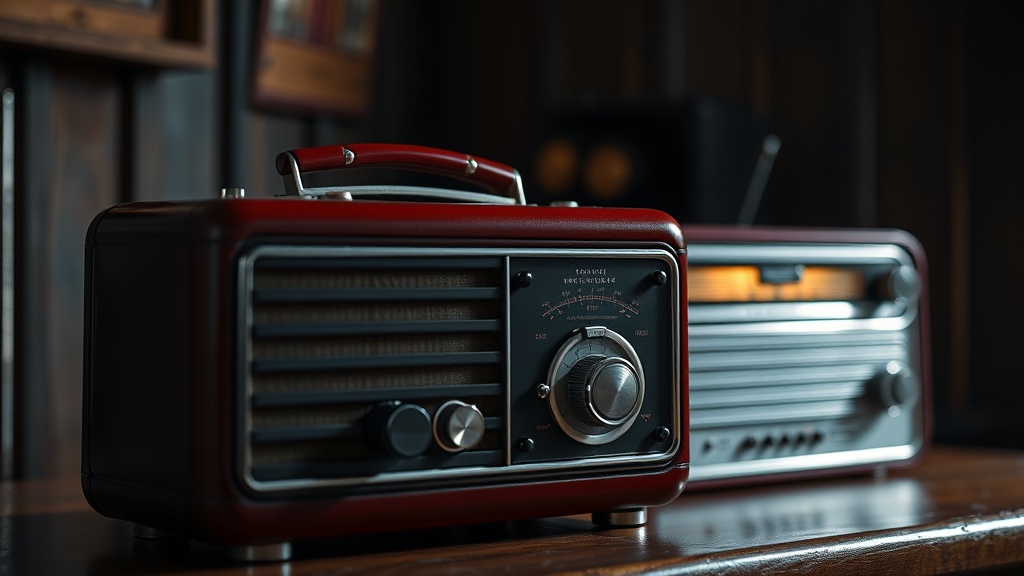
Why Bakelite and Catalin Radios Command Higher Prices

The Material Revolution of the 1930s
In 1907, Leo Baekeland changed the world of consumer goods forever with the invention of the first truly synthetic plastic. Before this, radio housings were heavy, cumbersome, and often made of wood or metal. The sudden shift to early plastics—specifically Bakelite and the much rarer Catalin—didn't just change how radios looked; it changed how they were marketed. These materials allowed for vibrant colors, intricate geometric patterns, and a lightweight feel that wood simply couldn't match. Collectors today aren't just hunting for a working receiver; they're chasing the specific chemical compositions of these eras. If you're looking at a shelf of vintage electronics, the difference between a common wood-veneer radio and a high-end Catalin model can mean a difference of hundreds, or even thousands, of dollars.
Bakelite was the reliable workhorse of the 1930s and 40s. It's a phenol-formaldehyde resin that's incredibly durable, often appearing in deep browns, blacks, or dark maroons. While it's much more common than its cousins, certain colorways—like the deep forest greens or certain creams—can still fetch a premium. It's a sturdy material, but it's not invincible. It can become brittle over time if kept in environments that are too dry or too hot. If you find a piece that looks almost like stone or heavy ceramic, there's a good chance you've found a high-quality Bakelite housing. It's a solid, dependable material that helped transition the radio from a piece of furniture into a piece of high-tech art.
What makes Catalin more valuable than Bakelite?
If Bakelite is the reliable sedan of the vintage radio world, Catalin is the exotic supercar. Catalin (a brand name for a specific type of cellulose nitrate plastic) is much rarer and significantly more expensive for several reasons. First, the manufacturing process was far more temperamental. Unlike the stable production of Baklete, Catalin was prone to chemical instability. This instability is actually what makes it so beautiful. Because the chemical composition wasn't always uniform, you get these incredible, marbled, or "swirled" patterns that are impossible to replicate today. You might see a radio that is half-amber and half-emerald green, or one that has deep, swirling veins of color throughout the casing.
The value of Catalin is driven by its scarcity and its visual drama. While Bakelite is often a solid, uniform color, Catalin is a spectacle. Collectors look for specific color patterns that are highly sought after, such as the "cherry red" or the "swirled jade." Because these materials are much more sensitive to light and heat, finding an intact, uncracked Catalin radio in high-quality condition is a rare feat. Most of these pieces have either succumbed to UV damage (turning yellow or fading) or have developed surface cracks. When you find a piece that has retained its original, vibrant saturation, you're looking at a true collector's prize.
"The visual depth of a Catalin radio is something a standard plastic just can't mimic. It's the difference between a flat paint job and a deep, swirling nebula."
How can you identify high-value vintage plastics?
Identification can be tricky if you aren't looking for specific clues. A great way to start is by examining the weight and the texture. Bakelite tends to feel quite heavy and has a certain "clack" sound when tapped lightly with a fingernail. It feels dense and somewhat organic. Catalin, on the other hand, often has a slightly more translucent quality. If you hold a light behind a thin section of the material, you might see a glow or a depth of color that a standard opaque plastic lacks. This translucency is a hallmark of high-end early plastics.
Another tip is to look at the edges and the seams. Because these materials were often molded, you might see slight imperfections that tell a story of their age. Be wary of modern "retro"-style plastics that look too perfect. Real vintage plastics have a certain character. If the piece feels incredibly lightweight or looks like it was injection-molded with modern-day precision, it's likely not the high-value material you're hunting for. You can learn more about the history of these materials through the Smithsonian Institution archives, which hold many records on the industrial evolution of consumer goods.
Are there specific colors that collectors hunt for?
Yes, and it's a massive part of the market. In the world of Bakelite, certain colors like bright reds or even deep blues are much more desirable than the standard chocolate brown. However, the real competition is in the Catalin market. In the 1940s, the color of your radio was a status symbol. Collectors are constantly searching for specific "color pops." For example, a Catalin radio in a bright, saturated orange or a striking seafoam green will almost always command a higher price than a neutral tone. The more "unusual" the color, the higher the ceiling for the price.
You'll often see collectors discussing the "depth" of the color. A color that looks like it's just on the surface is much less valuable than one that feels like it goes deep into the material. This is due to the way the pigments were mixed during the production of the cellulose-based plastics. If you're browsing an estate sale or an online auction, don't just look at the shape of the radio—look at the soul of the material. The color and the pattern are often more important than the actual radio mechanism inside. For more technical details on material science and historical eras, the Library of Congress provides excellent historical context for American industrial design.
How do you care for these delicate materials?
Caring for these radios is a delicate balancing act. You aren't just preserving a radio; you're preserving a chemical composition. The biggest enemies of Bakelite and Catalin are heat, light, and chemicals. Never, under any circumstances, use a harsh chemical cleaner on these surfaces. A simple, damp cloth is usually all you need. Using a modern household cleaner could permanently discolor the plastic or even cause the surface to crack. If you're cleaning a piece, use a very mild soap and water solution, but be incredibly careful not to let any moisture seep into the internal components.
Storage is just as important as cleaning. Keep your collection away from direct sunlight. UV rays are the primary cause of the fading and yellowing that plagues these vintage pieces. If you're displaying your radios, a shaded shelf or a glass-fronted cabinet is a much better option than a sunny windowsill. Also, keep an eye on the humidity levels in your room. Drastic shifts in temperature and moisture can cause the plastic to expand and contract, leading to those dreaded hairline cracks. Treating these items as fragile pieces of art rather than just old electronics is the only way to ensure they survive for the next generation of collectors.