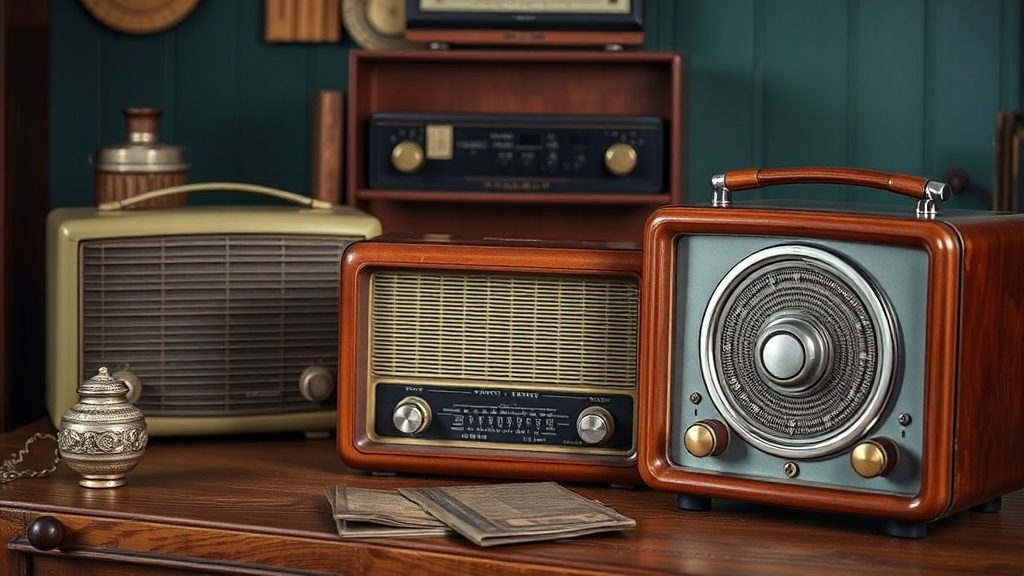
Where to Find Vintage Radios That Won't Empty Your Wallet

What's the Best Place to Start Hunting for Affordable Vintage Radios?
You walk into an estate sale on a Saturday morning — the house smells like cedar and old books, and there on a side table sits a Zenith 6-S-222 with a price tag of $35. To the untrained eye, it's just an old radio. To you, it's a find that could easily resell for $200 once properly cleaned. This scenario plays out every weekend across America, and knowing where to look is half the battle in building a respectable collection without draining your savings.
The vintage radio market has shifted dramatically in the past decade. What was once the domain of specialty shops and ham radio meetups has splintered across dozens of channels — each with its own quirks, pricing patterns, and opportunities for sharp-eyed collectors. Whether you're after a Bakelite cathedral radio from the 1930s or a mid-century Zenith Trans-Oceanic, understanding where these radios surface — and how to evaluate them in those moments — will save you hundreds of dollars and countless headaches.
Why Are Estate Sales Still the King of Radio Finds?
Estate sales remain the single best hunting ground for undervalued vintage radios — period. Here's why: families liquidating a relative's belongings rarely know what they have. A radio that sat on a grandparent's kitchen counter for forty years gets priced like a decorative knick-knack rather than a functioning piece of electronics history.
The key to estate sale success is timing and preparation. Most estate sale companies post photos online 24–48 hours before opening. Study those photos carefully — look for telltale signs like wooden cabinets with arched tops, grille cloth patterns, or distinctive knobs that hint at valuable manufacturers. Make a list of sales featuring radios and arrive early on the first day. Bring a small flashlight to inspect chassis conditions through back panels, and pack batteries to test battery-powered sets on the spot.
Pricing at estate sales follows a predictable curve: full price on day one, 25% off day two, 50% off day three. For common models — think Admiral table radios or RCA Victor plastic sets — waiting until Sunday afternoon can slash prices dramatically. But for anything rare, unusual, or clearly underpriced, buy immediately. That Scott Phantom won't survive until the discount day.
Flea Markets: High Volume, High Variance
Flea markets operate on a different rhythm than estate sales. Here, you're dealing with dealers who generally know their merchandise — but not always. The advantage is volume: a single morning at a large flea market lets you examine fifty radios instead of five.
Develop relationships with regular vendors. The guy who sells tools and happens to have a radio on his table every few weeks? Learn his name. Ask what he's looking for in trade. Many flea market dealers price based on what they paid plus a markup — if they acquired a Crosley for $10 at a garage sale, they'll sell it for $30 without researching actual value. Your knowledge becomes leverage.
Inspect flea market radios skeptically. These units often changed hands multiple times before reaching you. Check for obvious red flags: cracked cabinets, missing knobs, cut power cords, or water stains that suggest basement storage. A radio that "worked when I got it" usually didn't — assume every flea market find needs at least a recap and cleaning.
Can You Really Find Deals Online Anymore?
Online marketplaces have complicated the vintage radio hunt. On one hand, eBay and Facebook Marketplace expose you to national inventory you'd never see locally. On the other, increased visibility means increased competition — and prices that often reflect full retail value rather than bargain hunting.
Facebook Marketplace rewards persistence and speed. Set up keyword alerts for terms like "vintage radio," "tube radio," and "old radio" — many sellers use generic descriptions because they don't know brands or models. Check listings multiple times daily; the best deals vanish within minutes. Don't hesitate to message immediately with a simple "Is this available?" followed quickly by an offer at asking price if the photos look promising.
eBay requires a more strategic approach. Auctions ending at odd hours — Sunday mornings, weekday afternoons — attract fewer bidders. Look for listings with poor photos or incomplete descriptions; these get fewer views. Search for misspellings: "vintage raido," "Zeneth radio," or "Bakeilte radio" turn up treasures that other collectors miss.
Craigslist still works for local deals, though it's declined in popularity. The key here is expanding your search radius. Drive an hour for the right radio — the savings versus shipping often justify the gas money, and you avoid the damage risks of postal transport.
What About Hamfests and Radio Club Meetings?
Hamfests — swap meets organized by amateur radio clubs — represent the most overlooked opportunity for serious collectors. These events attract retirees unloading decades of accumulated gear, often at prices reflecting what they paid in 1985 rather than current market values.
The atmosphere at hamfests differs fundamentally from antique shows or flea markets. Vendors are hobbyists, not dealers. They're often more interested in finding good homes for equipment than maximizing profit. Strike up conversations about the radio's history — many sellers will discount prices for buyers who demonstrate genuine appreciation and knowledge.
Bring cash in small bills. Most hamfest vendors don't take cards, and having exact change speeds transactions when competing buyers circle nearby. Pack a magnifying glass for reading model numbers on crowded tables, and wear comfortable shoes — these events often span large parking lots or fairgrounds.
Radio club meetings offer another avenue. Join your local ARRL-affiliated club and attend regularly. Mention what you're collecting; members frequently know of estate situations or attic cleanouts before items ever reach public sale. The relationships built at these meetings generate more finds than any amount of online searching.
How Do Thrift Stores and Salvage Yards Fit In?
Thrift stores — Goodwill, Salvation Army, local charity shops — operate on pure volume pricing. They don't research items; they categorize by general type and stick on standard prices. A 1940s Emerson might cost the same $12.99 as a 1980s clock radio because both say "radio" on the shelf tag.
Success at thrift stores requires frequent visits. Inventory turns over completely every few days. Stop by the same locations weekly, heading straight for the electronics section. Check behind other items — employees sometimes hide interesting pieces to purchase later, but they don't always succeed.
Salvage yards and architectural salvage stores present stranger opportunities. When old houses get demolished, built-in radios and intercom systems sometimes surface. While most are too damaged for restoration, occasional gems appear — Atwater Kent breadboard radios, early cathedral cabinets, or radio-phono combinations that predate integrated circuits.
Recognizing When to Walk Away
Not every vintage radio deserves rescue. A Catalin with major cracks, a Bakelite case that's crumbling at the corners, or a wooden cabinet suffering from severe veneer delamination may cost more to restore than the finished unit warrants. Learn to evaluate structural integrity quickly: tap wooden cabinets — hollow sounds suggest separated joints; examine Bakelite under bright light for hairline stress fractures; check back panels for evidence of rodent nests or water damage.
The repair versus replace calculation matters too. A radio needing a simple capacitor replacement and cleaning is a weekend project. One requiring custom-wound transformers, unobtainable tubes, or complete cabinet rebuilding belongs to advanced restorers with well-equipped workshops. Price your offers accordingly — a "project radio" should cost significantly less than a working example.
How Should You Negotiate Without Offending Sellers?
Haggling etiquette varies by venue. Estate sale companies typically don't negotiate on day one — they work on commission and have incentive to maximize proceeds. Flea market vendors expect bargaining; offer 70% of asking price and settle around 80%. Online sellers on Facebook Marketplace often price expecting negotiation, so initial offers 10–15% below asking rarely cause offense.
The language of negotiation matters. Don't open with "What's your best price?" — it signals you haven't evaluated the item. Instead, point to specific condition issues: "I notice the grille cloth is torn and the volume knob is missing. Would you take $45 instead of $60?" This demonstrates expertise and justifies your offer. Sellers respond better to knowledgeable buyers than to low-ballers.
Building a vintage radio collection on a budget isn't about finding one magical source of underpriced treasures. It's about developing systems — regular estate sale routes, online alert setups, relationships with sellers — that expose you to enough inventory that the occasional great deal becomes inevitable. The collector who checks three sources weekly will outperform the one who waits for perfect listings to appear. Start with estate sales, supplement with flea markets, monitor online listings obsessively, and never skip the local hamfest. Your $35 Zenith is out there waiting — probably priced next to a ceramic cat and a stack of old National Geographic magazines.