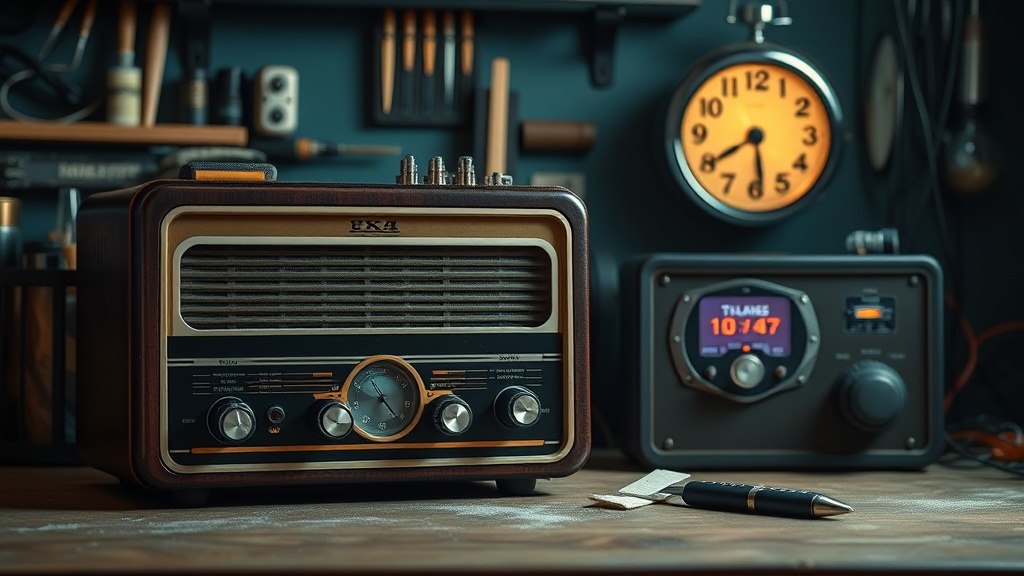
How to Safely Clean and Restore Vintage Tube Radios

Vintage tube radios from the 1920s through the 1960s represent some of the most beautiful — and fragile — pieces in any collector's lineup. This guide covers the complete restoration process: assessing condition, cleaning delicate components, replacing failed capacitors, and bringing dead sets back to life. Whether you've got a 1938 Zenith console or a 1955 Bakelite tabletop, the techniques here will help preserve these machines without destroying their value (or electrocuting yourself in the process).
How Do You Know If a Vintage Radio Is Worth Restoring?
Not every barn-find radio deserves a full restoration. The decision comes down to condition, rarity, and your own skill level.
Start with a visual inspection. Look for obvious damage: cracked cabinets, water stains, missing knobs, or tubes that rattle when shaken gently. These issues aren't deal-breakers — they're data points. A cracked cabinet on a common 1940s Philco might not be worth the effort. That same damage on a rare Emerson 400 Aristocrat? Different story entirely.
Check the chassis for corrosion. Surface rust cleans up. Pitted, flaking metal means extensive work ahead. Peek inside (carefully — more on safety later) and look for burned components, melted wax on capacitors, or that distinctive "hot electronics" smell. All normal for radios that haven't run in decades.
Here's the thing: even "dead" radios often just need basic maintenance. A radio that won't power on might simply have a failed power cord (common) or a blown fuse (easy fix). The real problems start when transformers hum, tubes glow orange at the base, or you smell burning. Those signals mean stop and assess before proceeding.
Quick Assessment Checklist:
- Does it power on at all? (Any light, hum, or static)
- Are all tubes present and unbroken?
- Is the speaker cone intact?
- Does the tuning mechanism move smoothly?
- Any signs of previous "repair" attempts? (Solder blobs, clipped wires, electrical tape)
What Safety Precautions Matter Most When Working With Tube Radios?
Tube radios contain lethal voltages — even when unplugged. Capacitors store charge for days after power-down.
Before touching anything inside, discharge the power supply. Use a resistor with insulated leads (a 20k ohm, 2-watt resistor works well) connected across the filter capacitor terminals. Hold it for several seconds. Better yet, invest in a capacitor discharge tool designed for high-voltage equipment.
Work with one hand behind your back. Seriously — this old technician's trick prevents current from traveling across your chest if you touch something live. Wear rubber-soled shoes. Stand on a rubber mat if possible. Keep a wooden broomstick nearby (for knocking someone loose if they freeze from shock — morbid but practical).
The tubes themselves get hot. Very hot. Some output tubes run at 150°F or higher during operation. Let the radio cool completely before handling. And those beautiful glowing filaments? Fragile when hot. Moving a warm tube can destroy the internal elements.
Don't attempt repairs on irreplaceable family heirlooms first. Practice on common sets — the Radio Museum database lists thousands of models, most worth under $50 — before tackling that mint-condition 1939 RCA.
How Do You Clean a Vintage Radio Without Damaging It?
Cleaning comes in stages. Start with the cabinet, move to hardware, then tackle the electronics (only after electrical safety checks).
Wooden Cabinets: Skip the furniture polish — it leaves residues that attract dust and can damage old finishes. Instead, use a slightly damp microfiber cloth followed by dry buffing. For caked-on grime, a solution of mild dish soap (Dawn works well) and warm water applied sparingly, wiped immediately. Never soak wood.
Bakelite and catalin cabinets need different treatment. These early plastics discolor and fade over time. Clean with Novus Plastic Polish #1 (gentle) or #2 (for deeper cleaning). Avoid ammonia-based cleaners — they yellow Bakelite permanently. For that distinctive Catalin marbled look, a light coat of Renaissance wax protects without altering appearance.
Metal grilles and trim require patience. Steel wool removes chrome — don't use it. Instead, try Flitz Metal Polish or Mother's Mag & Aluminum Polish on a soft cloth. For rust spots on chassis components, a fiberglass scratch brush works wonders without removing metal.
The electronics need the most care. Dust accumulation acts as insulation — bad for heat dissipation. Use a soft brush (natural bristle, not synthetic which creates static) and a can of compressed air. For stubborn grime on tube sockets and switches, DeoxIT D5 contact cleaner (the industry standard) dissolves oxidation and leaves a protective film.
Worth noting: original capacitors often have wax coatings that melt with aggressive cleaning. Work around them. Replacing old paper and electrolytic capacitors is standard practice anyway — more on that next.
Which Components Should You Replace First?
Capacitors fail with age. Period. Paper and wax capacitors from the 1940s and 50s are almost always leaky or open by now. Electrolytic filter capacitors dry out. These failures cause hum, weak reception, or complete silence.
Standard Replacement Priority:
| Component | Symptoms When Failed | Replacement Type | Notes |
|---|---|---|---|
| Filter capacitors (large cans) | Hum, motorboating, weak audio | Modern electrolytic or film | Restuff original cans for appearance, or mount modern caps underneath |
| Paper/wax capacitors | Distortion, low volume, intermittent operation | Polyester film or modern ceramic | Replace all of them — don't wait for failure |
| Electrolytic cathode bypass caps | Loss of bass, reduced gain | Modern electrolytic | Match voltage rating, capacitance can vary ±20% |
| Power cord | Intermittent power, safety hazard | Polarized 2-wire or 3-wire with ground | Add fuse for safety — vintage radios didn't have them |
Resistors drift high with age. Carbon composition resistors (the cylindrical brown ones) are notorious for this. A 10k resistor might measure 25k after 70 years. This throws off bias voltages and can damage tubes. Replace with modern metal film resistors — they're stable, quiet, and available in vintage-looking packages from suppliers like JustRadios.
Tubes are the last thing to suspect. Test them first — they're expensive and often not the problem. A tube tester helps (the Hickok 600A remains the gold standard for collectors), or take them to a local shop. That said, rectifier tubes (5Y3, 5U4, 35Z5) do wear out. Output tubes (6V6, 6L6) can lose emission over decades of use.
What's the Right Way to Test and Align a Restored Radio?
Alignment brings a radio to peak performance. Over time, component drift throws off the tuned circuits. The result? Weak reception, poor selectivity (stations bleeding together), or dead spots on the dial.
You'll need a signal generator and an alignment tool (non-metallic screwdriver — brass or nylon). The service manual (find these at Nostalgia Air) specifies alignment frequencies for each IF transformer and the oscillator trimmer.
The process isn't complex, just methodical: inject a signal at the intermediate frequency (usually 455 kHz for American AM radios), adjust the IF transformers for maximum output, then move to the RF stage and align the antenna and oscillator circuits across the dial. Small adjustments — quarter turns — make big differences.
Here's the thing about alignment: it's the difference between a radio that "works" and one that sings. A properly aligned 1940s set can pull in distant stations with surprising clarity. An unaligned one sounds flat and local-only.
After alignment, let the radio run for several hours. Heat changes component values slightly. A "hot alignment" — tweaking trimmers after the set reaches operating temperature — optimizes performance for real-world use.
How Should You Store and Maintain Restored Vintage Radios?
Restoration is pointless if the radio degrades in storage. These machines like to be used — occasionally, at least.
Run restored radios monthly for 30 minutes. This keeps capacitors formed, lubricates switches and potentiometers, and prevents moisture buildup. Store in climate-controlled spaces — not attics (heat kills) or damp basements (rust and mold). Ideal conditions: 65-75°F with 40-50% humidity.
Cover radios when not in use. Dust is the enemy of switches, potentiometers, and speaker cones. Simple cloth covers work; commercial radio covers from suppliers like Joe's Radio Covers fit specific models precisely.
The catch? Even "restored" radios need ongoing attention. That volume pot will get scratchy again. The power switch might develop intermittent contact. Keep DeoxIT on hand, check tubes annually for silvering (normal wear), and listen for changes in sound quality. Early intervention prevents major repairs.
Document everything. Photograph the original wiring before disassembly. Save old parts (especially tubes) even if replaced. Future collectors — or your future self — will appreciate the provenance and the option to return to original configuration.
"A vintage radio isn't a museum piece — it's a working machine from a different era. Treat it with respect, understand its limitations, and it'll provide decades of enjoyment. Ignore basic maintenance, and even the finest restoration won't last."
The community matters too. Join the Antique Radio Forums — thousands of collectors share schematics, troubleshooting tips, and encouragement. Local radio clubs (the New Jersey Antique Radio Club, for example) host meetups where you can examine working examples and learn hands-on techniques no manual teaches.
Restoring tube radios connects you to craftsmanship rarely seen today — hand-wired chassis, point-to-point connections, components built to last generations. The glow of a 6E5 "magic eye" tuning tube, the warm sound of a push-pull 6V6 output stage, the mechanical precision of a weighted tuning mechanism — these experiences reward the effort many times over. Just remember: patience prevents mistakes, safety prevents tragedy, and documentation preserves history.
Steps
- 1
Inspect and Clean the Exterior Cabinet
- 2
Replace Aging Capacitors and Check Tubes
- 3
Test, Tune, and Fine-Tune the Audio