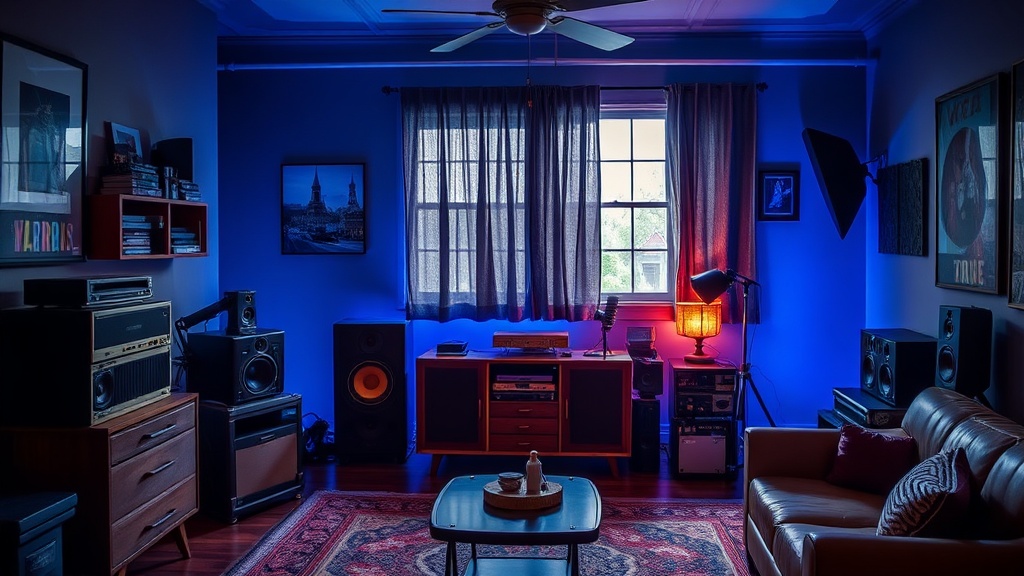
How to Build a Listening Room That Shows Off Your Radio Collection

What makes a radio collection worth displaying?
You've spent years hunting down that Zenith Wave Magnet or the perfect Motorola Catalin clock radio. Maybe you've got a shelf of Bakelite beauties or a growing lineup of tube-era consoles. But here's the question—are you actually enjoying them, or are they just sitting in boxes, waiting for "someday"? This guide walks through building a dedicated listening room (or corner) that puts your vintage radios front and center. Not a museum. Not a storage unit. A space where you can fire up a shortwave set at midnight, hear the hum of warm tubes, and maybe even convince a friend that AM radio still matters.
We'll cover room layout, lighting that flatters old plastics and wood grains, acoustic considerations (yes, they matter even for mono output), and how to rotate your collection without wearing out your favorites. By the end, you'll have a blueprint—whether you've got a spare bedroom or just a corner of the living room.
Where should you set up your listening space?
Location matters more than you'd think. Vintage radios aren't modern Bluetooth speakers—you can't just tuck them anywhere and expect magic. Tube sets need ventilation. Console radios need floor support. And everything sounds better when the room itself isn't fighting you.
If you've got options, pick a room with these qualities:
- Moderate temperature swings — Attics and unheated garages are death sentences for Bakelite and wood cabinets. Stick to climate-controlled spaces.
- Access to exterior walls — Shortwave and AM reception improve when antennas can reach toward the outside world. An exterior wall gives you placement flexibility.
- Minimal interference sources — LED bulbs, dimmer switches, and computer equipment all generate RF noise. You'll hear it as hash and static on sensitive sets. Test by tuning a portable radio to an empty AM frequency and walking around your candidate room.
No spare room? No problem. A single dedicated corner works—just prioritize the factors above. I've seen stunning setups built into alcoves, under staircases, even in converted closets. The key is intentionality. When space has a purpose, it gets used.
How do you arrange radios for both display and function?
Here's where most collectors stumble. They optimize for display or function, rarely both. The result? Beautiful shelves of radios that never get powered on—or a chaotic workshop where nothing's protected.
The sweet spot is "accessible curation." Every radio should be two things: visible enough to appreciate, and reachable enough to actually use. That means:
- Vertical storage with power access — Use bookcases or vintage industrial shelving (old factory carts work beautifully). Install power strips behind units, not in front where they become eyesores. Leave 6-8 inches of clearance behind tube sets for heat dissipation.
- Rotation system — You can't listen to ten radios at once. Keep 3-5 favorites out, store the rest. Swap quarterly. This prevents wear on any single set and keeps the room feeling fresh.
- The "active zone" concept — Designate one surface as your listening station. A sturdy table at comfortable seated height, with your daily driver and a rotation of headphones or a small external speaker. Everything else becomes backdrop.
For console radios—the big floor-standing furniture pieces—treat them as room anchors. Place one against a solid wall, not floating in space. They're heavy, they're meant to be approached, and they need the wall's support (both physical and acoustic). A Zenith chairside or Philco Predicta becomes a natural gathering point when positioned deliberately.
What lighting shows vintage radios at their best?
Bad lighting kills good displays. Fluorescent tubes flatten Catalin's depth. Direct sunlight yellows plastics and fades cabinet finishes. Harsh spotlights create glare on curved Bakelite surfaces. You need to think like a gallery curator—but one who also wants to use the objects.
Warm LED strips (2700K-3000K color temperature) tucked behind shelves create depth and eliminate harsh shadows. They're low-heat, so safe near old plastics. Position them to graze across radio fronts rather than blast directly—this picks up texture, grill cloth weave, the depth of vacuum tube glass.
For work lighting—because you'll eventually need to change tubes or clean switches—use adjustable arm lamps with warm bulbs. Avoid anything that buzzes electrically; you'll hear it through sensitive sets. And if you're serious about shortwave listening, install dimmable options. Night listening sessions demand low ambient light to preserve your dark adaptation.
One collector I know installed vintage-style Edison bulbs in ceramic sockets, arranged like old radio station studios. It's thematic, warm, and completely period-appropriate. Another used small puck lights inside display cabinets with glass fronts. Both approaches work—the key is controlling intensity and color temperature.
Do acoustic treatments matter for mono AM radios?
Surprisingly, yes. Not for stereo imaging—your 1948 Motorola isn't doing that—but for clarity, bass response, and neighbor relations. Hard, empty rooms create echo that muddies speech intelligibility. Console radios with built-in speakers need boundary reinforcement (walls behind them) to develop any low-end presence. And if you're running external speakers or patching into a vintage hi-fi setup, room treatment becomes even more relevant.
Simple fixes:
- Rugs or carpet — Bare floors reflect sound. A rug between you and your listening position absorbs first reflections.
- Bookshelves as diffusion — If your radio collection is on open shelving, congratulations—you've already got acoustic treatment. Books and objects break up standing waves.
- Curtains — Windows are sound mirrors. Heavy drapes help, especially if your listening room doubles as a display space.
For the serious collector: consider a small vintage speaker system—maybe a pair of 1950s bookshelf speakers or a period-appropriate corner horn—to extend your console radio's reach. Many tube-era sets have external speaker jacks specifically for this purpose. The Antique Radio Classified community has extensive threads on period-correct speaker pairings.
How do you protect your collection while keeping it accessible?
Display is only half the equation. Vintage radios need care—dust control, humidity management, occasional exercise. Build these into your room design from the start.
Dust is the silent killer. It infiltrates switches, settles on tubes, mats down grill cloth. Your listening room should have a door that closes. If that's impossible, consider glass-front cabinets for your most pristine pieces. For open displays, keep a soft brush and microfiber cloths nearby—cleaning should be frictionless, not a chore you postpone.
Humidity targets 40-50% relative humidity. Below 30% and wood cabinets crack; above 60% and you're inviting mold, corrosion, and capacitor damage. A small digital hygrometer costs ten dollars and removes all guesswork. In dry climates, a humidifier helps. In damp basements, a dehumidifier is mandatory.
Exercise your sets—a radio that sits unpowered for years develops capacitor problems, switch corrosion, potentiometer scratchiness. Your rotation system helps here. Every radio should see power at least quarterly, even if just for an hour of background listening. This keeps electrolytic capacitors formed and contact surfaces clean.
Finally, document everything. Photograph each radio's condition when acquired. Note restoration dates, tube replacements, any modifications. A simple spreadsheet works. Some collectors use the RadioMuseum.org database to track their holdings. When you have dozens of sets, memory fails—written records preserve provenance and maintenance history.
Your listening room isn't just storage. It's a statement about what you value. Build it slowly, arrange it thoughtfully, and use it often. The best vintage radio collections aren't the largest—they're the ones that get played.